
Dental implants are often described as a long-term or even permanent tooth-replacement option. But how long do dental implants actually last?
Long-term studies show high implant survival over many years, including well beyond a decade. Individual results still depend on oral health, maintenance, smoking, systemic health, bite forces and the condition of the bone and gums around the implant.
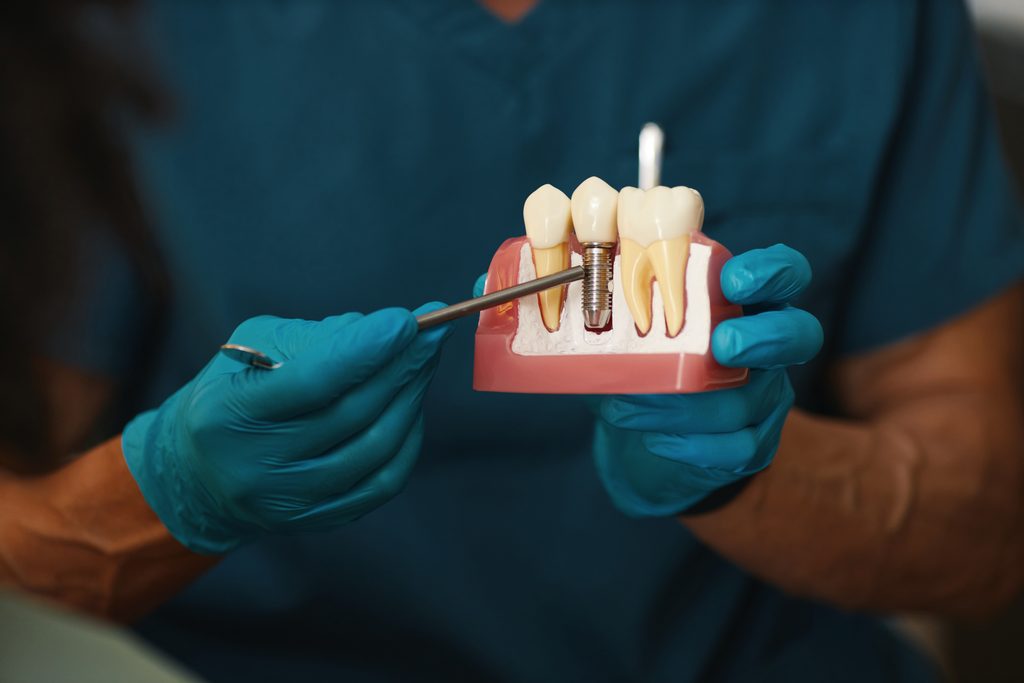
The Implant and the Crown Are Two Different Parts
One of the most important things to understand is that the implant post and the visible tooth restoration are separate components.
The implant is placed in the jawbone and acts as the replacement root. A crown, bridge or another restoration is attached above it. The implant itself may remain stable for decades while the visible restoration eventually needs maintenance or replacement because of normal wear.
What Does Implant “Survival” Mean?
Clinical research often reports implant survival rather than promising that an implant will be completely maintenance-free. Survival generally means the implant remains present and functional.
A surviving implant can still require professional maintenance or treatment of surrounding tissue. That distinction matters when interpreting long-term percentages.
What Can Shorten the Life of a Dental Implant?
Implant complications can be biological or mechanical.
Biological problems include inflammation and disease around the implant, often referred to as peri-implant disease. Mechanical complications can involve the crown, abutment or other restorative components rather than the implant post itself.
Why Gum Health Matters
Dental implants cannot develop a cavity, but the gum and bone around them can still become inflamed or diseased.
Consistent home care and professional maintenance help reduce plaque accumulation and allow changes around an implant to be identified earlier.
Smoking and Systemic Health
Smoking is repeatedly associated with increased implant complications because it can interfere with healing and the health of the supporting tissue.
Systemic conditions can also influence healing. Patients with conditions such as diabetes should discuss their medical history and current disease control with both their dentist and physician as appropriate.
Does Grinding Affect Dental Implants?
Grinding and clenching can increase mechanical stress on implant restorations. In some cases, a nightguard or another strategy for managing excessive bite forces may be recommended.
The bite should be evaluated as part of treatment planning instead of considering the missing tooth in isolation.
How Can You Help an Implant Last Longer?
- Brush thoroughly around the implant restoration.
- Use the flossing or interdental tools recommended for your case.
- Keep regular professional cleaning and examination appointments.
- Avoid smoking.
- Manage grinding or clenching when identified.
- Contact your dentist if the implant restoration feels loose or the surrounding gums change.
What If You Are Still Deciding Whether to Get an Implant?
Longevity is only one part of the decision. You also need to consider the condition of the bone, neighboring teeth, overall oral health and alternative replacement options.
If the surgery itself is your biggest concern, our guide to whether dental implants hurt explains what patients can generally expect during placement and recovery.
Dental Implants in Goshen, Indiana
If you are considering dental implants in Goshen, Indiana, Stutsman Dentistry can evaluate whether an implant is appropriate and explain what long-term maintenance would look like for your specific situation.
For patients with more extensive restorative needs, implants may also be one component of full mouth reconstruction.
The Bottom Line
Dental implants have a strong long-term track record and can function for decades, but they are not maintenance-free. Protecting the gum and bone around the implant, controlling risk factors and keeping up with professional care all influence long-term success.